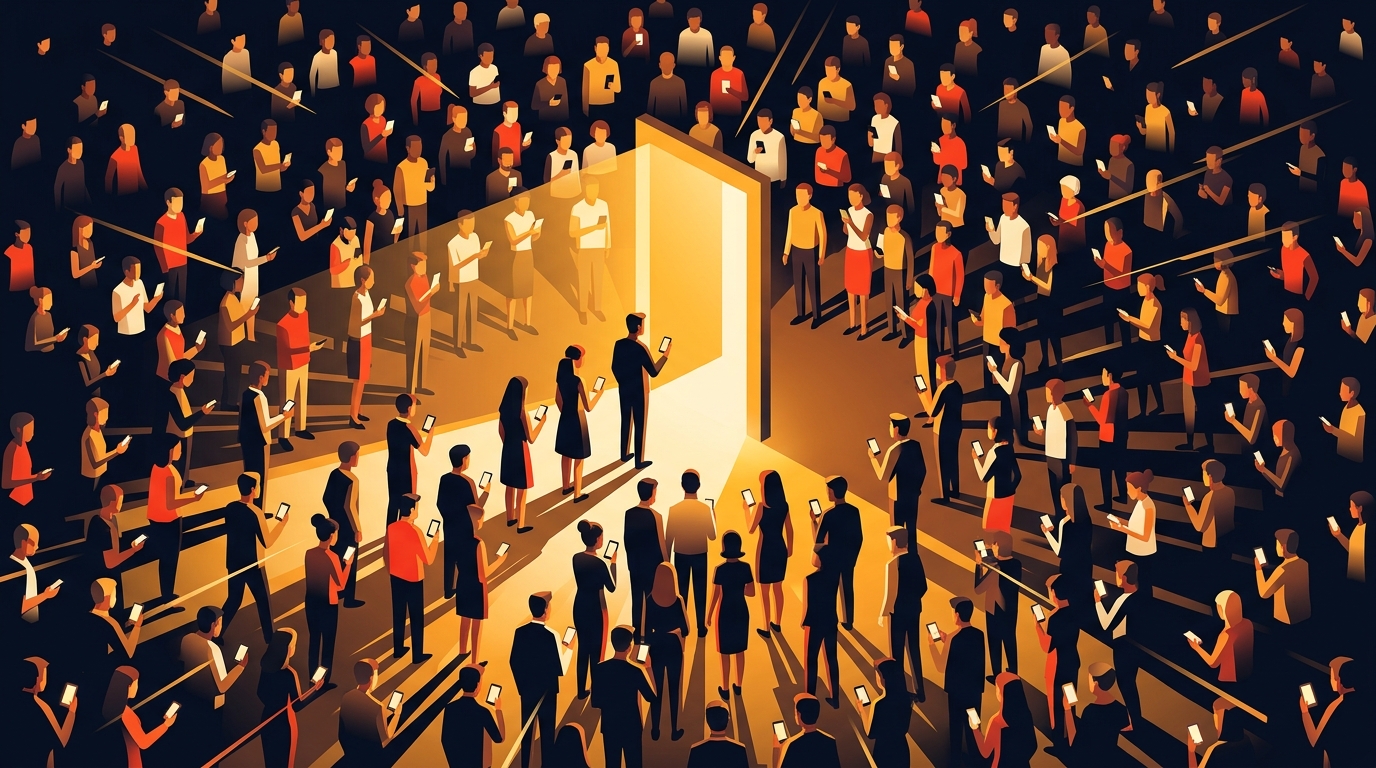
A few seconds after the sale opens, thousands of people try to buy at the same time. The system cannot fail.
In recent years, the live entertainment industry has watched a scene repeat itself that no one wants to star in: a ticketing platform collapses at peak traffic, buyers can’t complete their transactions, and the artist or event ends up at the center of a reputation crisis that wasn’t their fault. The problem isn’t the demand. The problem is technology that wasn’t ready for it.
Ticketplus was engineered from the ground up to operate under pressure. Here’s what happens behind the screen when thousands of tickets sell in minutes.
The Real Challenge: Concurrency, Not Volume
Selling 50,000 tickets over a month is manageable for almost any system. Selling 50,000 tickets in 4 minutes is an entirely different engineering problem.
What happens when a major on-sale goes live:
- Tens of thousands of simultaneous HTTP requests hit the server
- Each user expects a real-time response: “Is this ticket still available?”
- The payment gateway receives a concentrated burst of transactions
- Stock must be reserved instantly to prevent overselling
- Any delay of more than 2–3 seconds feels like a failure to the buyer
This is a distributed systems problem, not just a scaling problem.
Virtual Waiting Room: Orderly Queue Instead of Server Collapse
Ticketplus implements a virtual waiting room that activates automatically when concurrent demand exceeds defined thresholds.
How it works:
- When traffic spikes beyond normal capacity, buyers entering the sale are placed in a queue
- Each position is assigned and maintained — first come, first served
- The buyer sees their real-time position in the queue and an estimated wait time
- When it’s their turn, they’re admitted to the purchase flow with a time window to complete the transaction
The result: instead of everyone hitting the server at the same time and getting errors, traffic is metered in controlled batches. The system stays stable. No one gets a false “sold out” because of a timeout.
Real-Time Stock Reservation
One of the most complex problems in high-demand ticketing is race conditions: two buyers simultaneously selecting the last available ticket in the same zone.
Ticketplus uses an optimistic locking mechanism with a reservation timeout:
- When a buyer selects a ticket, it’s soft-reserved for a defined window (typically 8–12 minutes)
- If they don’t complete the purchase within that window, the ticket is released back to the pool
- If two buyers attempt to reserve the same ticket simultaneously, the system guarantees only one succeeds — the other is immediately offered an alternative
This prevents overselling without creating artificial scarcity or blocking inventory unnecessarily.
Active Monitoring During Launch
Technology is only part of the equation. During high-demand on-sales, Ticketplus activates a real-time monitoring protocol:
- Dedicated infrastructure team on standby during the launch window
- Live dashboards tracking server load, error rates, payment gateway response times, and queue depth
- Automated alerts for anomalies with sub-minute response time
- Ability to scale infrastructure horizontally in real time if needed
Infrastructure Designed for Peaks, Not Averages
Most systems are sized for average traffic. A ticketing platform that handles one major on-sale per week will sit mostly idle — and then get crushed when demand spikes 100x.
Ticketplus uses cloud infrastructure with auto-scaling policies configured for rapid horizontal expansion. The baseline capacity can multiply within minutes when traffic patterns indicate an incoming spike — before the spike actually hits.
What This Means for Organizers
For an event organizer, all of this technical infrastructure has one practical implication: you don’t need to worry about whether the platform will hold up on your biggest day.
Ticketplus has handled:
- Copa Mundial Sub-20 FIFA Chile 2025: 600,000+ attendees across 52 matches
- Festival launches with 50,000+ concurrent users
- Artists with sold-out on-sales in under 5 minutes
The platform was built for these moments — not retrofitted for them.
Planning a high-demand event? Talk to our team about how we handle scale.